Basement flooring is one of the trickiest decisions in any home renovation. Unlike above-grade rooms, basements present unique challenges: ground moisture wicking up through concrete, temperature swings, and the occasional (or not-so-occasional) water intrusion. Get it wrong and you're tearing it all out within a few years. Here's what actually works.
The Basement Challenge: Moisture
Even finished, dry-looking concrete slabs emit moisture vapor. This is a natural process called moisture vapor transmission (MVT), and it happens in virtually every concrete floor in the Okanagan. Before choosing flooring, do a basic moisture test: tape a piece of plastic sheeting to your concrete slab, seal all four edges, and leave it for 48–72 hours. If you see condensation on the underside, you have meaningful moisture to deal with.
Pro Tip: For a more precise measurement, ask us about calcium chloride moisture tests — these give you a number (lbs/1000 sq ft/24hrs) that tells you exactly what products are safe to install.
#1 Pick: Luxury Vinyl Plank (LVP)
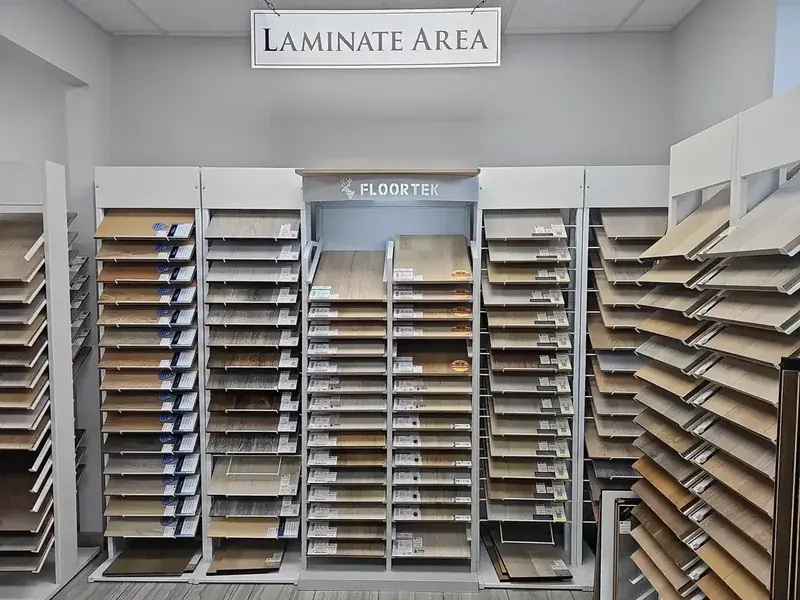
LVP is the best all-around basement flooring for Kelowna homes. It's 100% waterproof, installs as a floating floor (no glue to concrete required), handles temperature swings well, and looks fantastic. If water does get in — from a sump pump failure, heavy rain, or a plumbing issue — LVP can often be dried out and reinstalled.
- 100% waterproof core — handles moisture vapor and flooding
- Floating installation — no bonding to slab required
- Softer and warmer underfoot than tile
- Wide style selection — wood-look, stone-look, and more
- Can be installed over minor floor imperfections
For basements, choose LVP with a minimum 6 mil wear layer for residential use, or 12 mil if the basement will see heavy use. Look for products rated for below-grade installation — not all LVP is approved for basement use, so always check the manufacturer's specifications.
#2 Pick: Carpet with Moisture Barrier Underpad
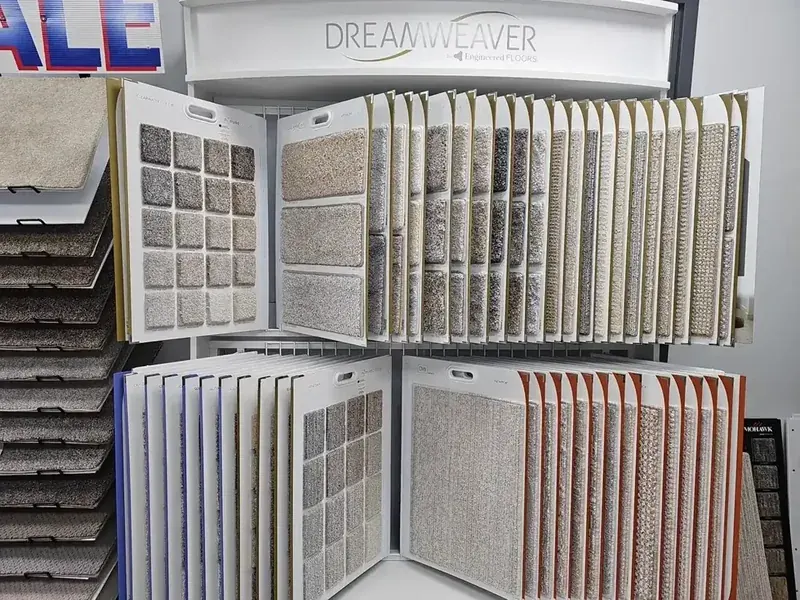
Carpet is the warmest and most comfortable basement flooring option — and it's often the most budget-friendly. The key is using a closed-cell foam underpad (rather than traditional open-cell foam) that acts as a moisture barrier. Closed-cell pads don't absorb water and won't grow mold.
For families using the basement as a rec room, playroom, or home theatre, carpet is hard to beat for comfort. Just ensure your basement has no active moisture issues before installing — carpet is forgiving of vapor transmission with the right pad, but not of flooding.
#3 Pick: Engineered Hardwood
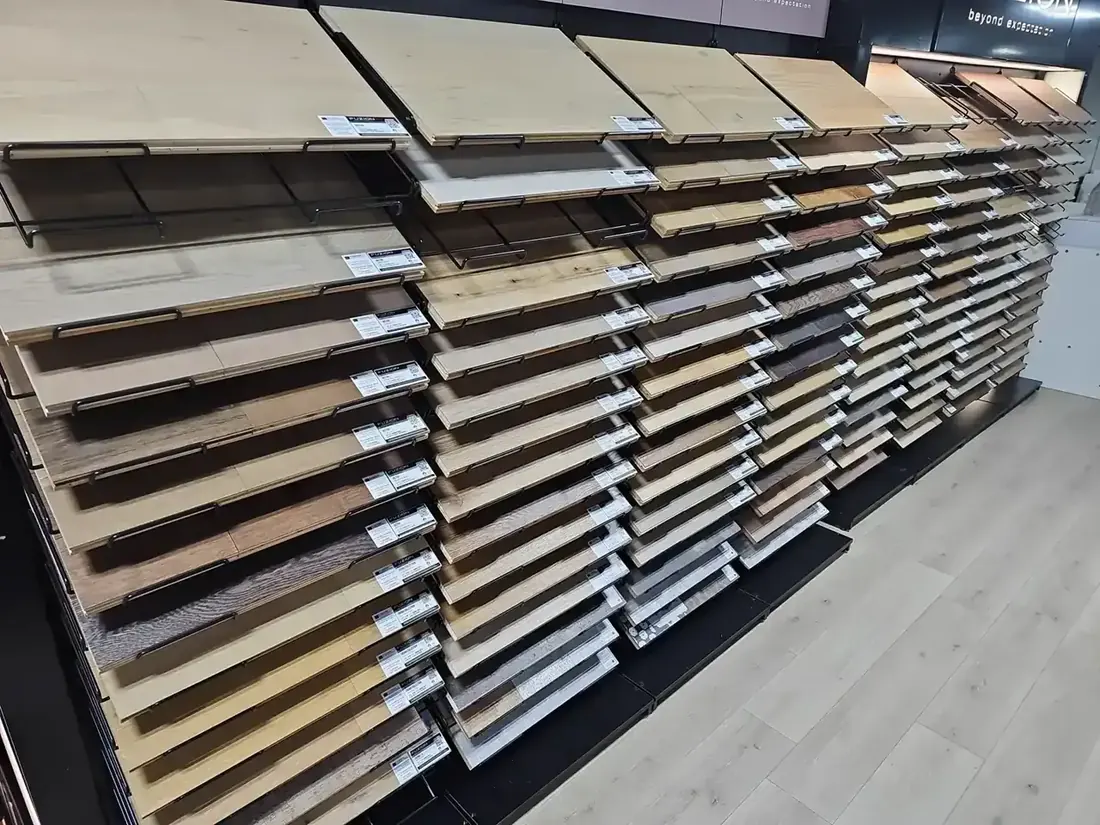
Engineered hardwood can work in a Kelowna basement, but with caveats. Because it has a real wood veneer on top, it's more dimensionally stable than solid hardwood — but it's not waterproof. It should only be installed in dry, conditioned basements with low moisture vapor readings.
If your basement is consistently dry and you want the warmth and prestige of real wood, engineered hardwood is a viable option. Use a glue-down or floating installation method — never nail-down on a concrete slab.
What to Avoid in Basements
- Solid hardwood — will cup, gap, and buckle from moisture vapor
- Standard laminate — HDF core swells when wet; irreparable damage
- Ceramic/porcelain tile — technically fine for moisture, but cold, hard, and unforgiving; also prone to cracking if the slab shifts
- Hardwood-look laminates without a moisture barrier underpad
Subfloor Considerations
A raised subfloor system (like DRIcore or Barricade) creates an air gap between the concrete and your flooring. This is especially valuable if you have any moisture concerns. These systems add about 1.5" to your floor height but dramatically reduce the risk of moisture-related flooring failure.
Not sure what your basement moisture levels are? Come into our showroom at Unit 16, 830 McCurdy Place — we can walk you through the testing process and recommend the right products for your specific situation.