Open-plan homes — where the kitchen, dining, and living areas share one continuous space — are one of the most popular layouts in new Kelowna construction and renovations. But they create a flooring challenge: what do you do across a large, connected space? Run one floor throughout? Transition between materials? Here's how to think through it.
Option 1: One Floor Throughout — The Cleanest Look
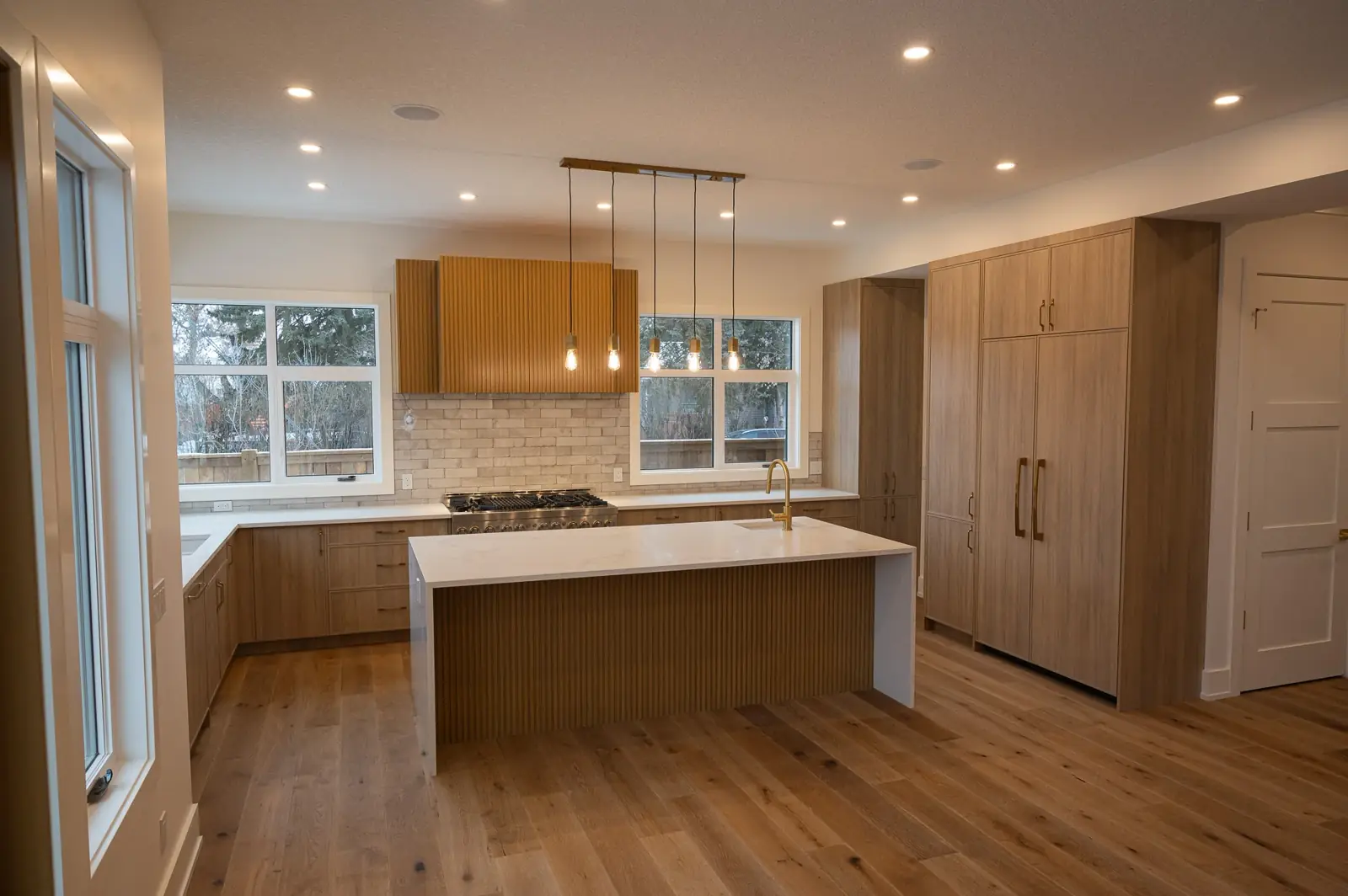
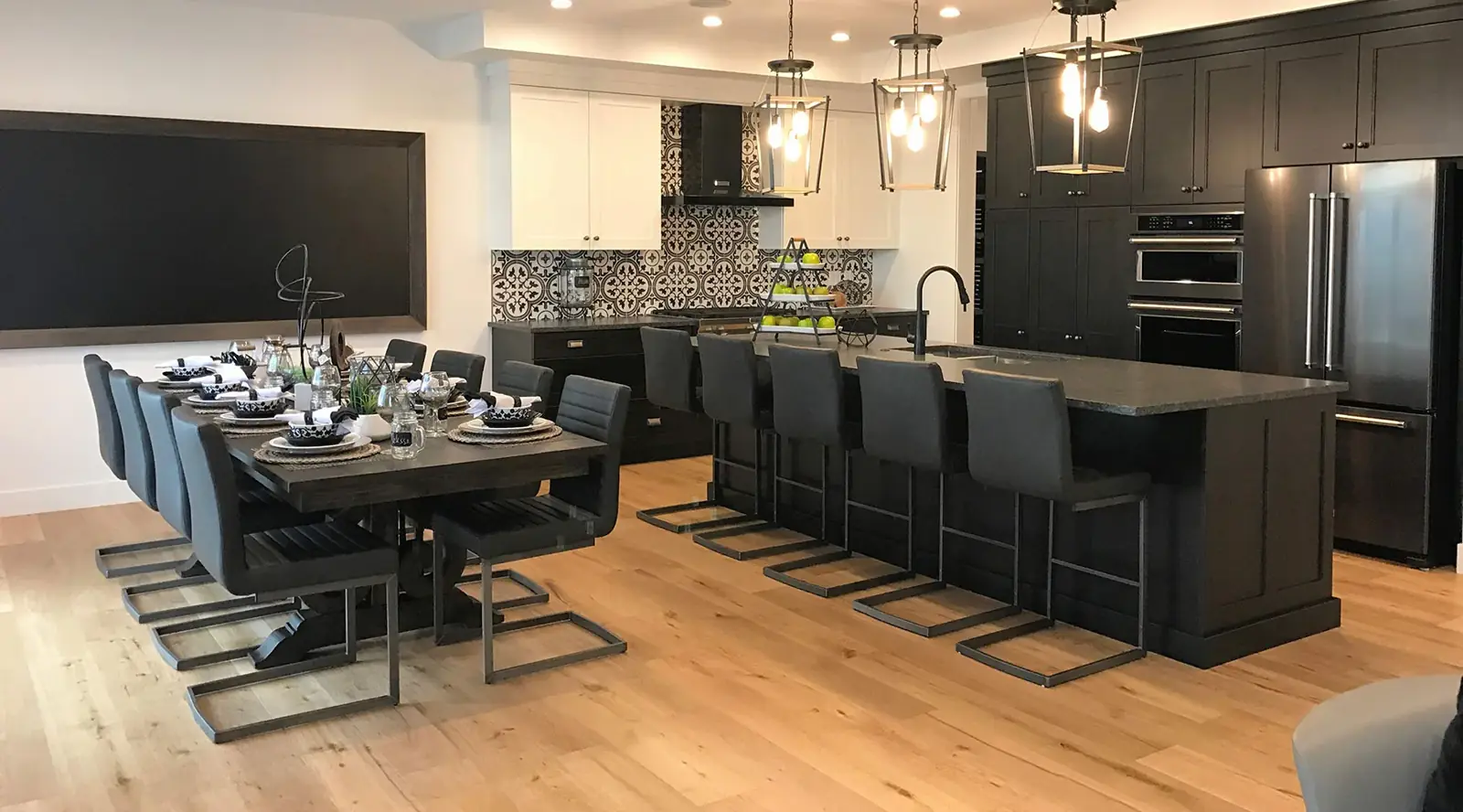
The most visually cohesive approach is running a single flooring type through the entire open-plan area. This makes spaces feel larger, eliminates transition strips mid-room, and creates a unified aesthetic. LVP and hardwood both work beautifully this way.
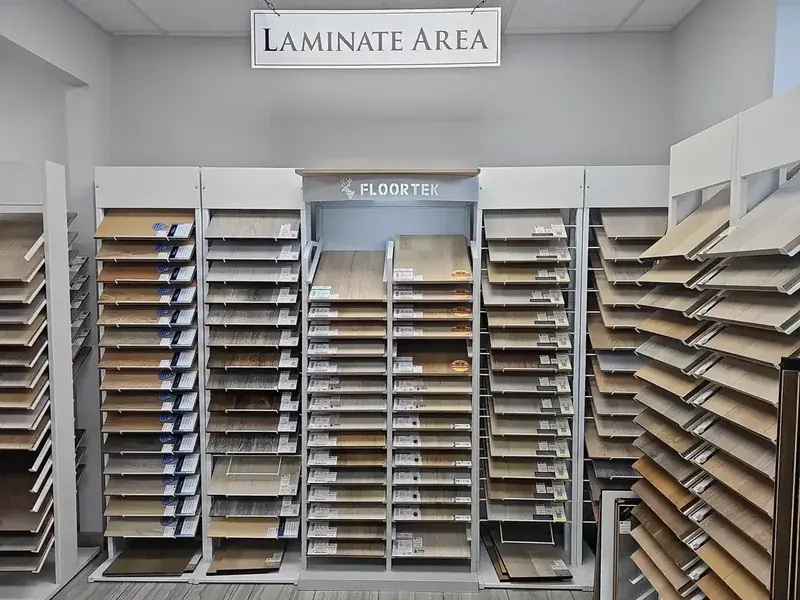
- Best materials for whole-floor continuity: LVP (most practical), engineered hardwood (premium), laminate (budget-friendly)
- Run planks lengthwise in the direction of the longest wall or toward the main light source
- For LVP and floating floors, you may need expansion breaks in very large areas (typically over 30 ft in either direction)
Option 2: Intentional Material Transitions
Using two different materials — wood-look LVP in the living area, large-format tile in the kitchen — can look deliberate and sophisticated when done right. The key is making the transition at a natural boundary: a doorway, an island, or a change in ceiling height.
Avoid transitions in the middle of open spaces with no architectural boundary — it looks arbitrary. And choose materials that complement each other in tone: warm LVP with warm-toned tile, or both in the same cool grey family.
Design Tip: T-bar transition strips can look cheap. Consider a recessed metal border strip, a flush tile-to-wood transition using a schluter strip, or simply running both materials to a natural threshold.
Colour and Tone Consistency
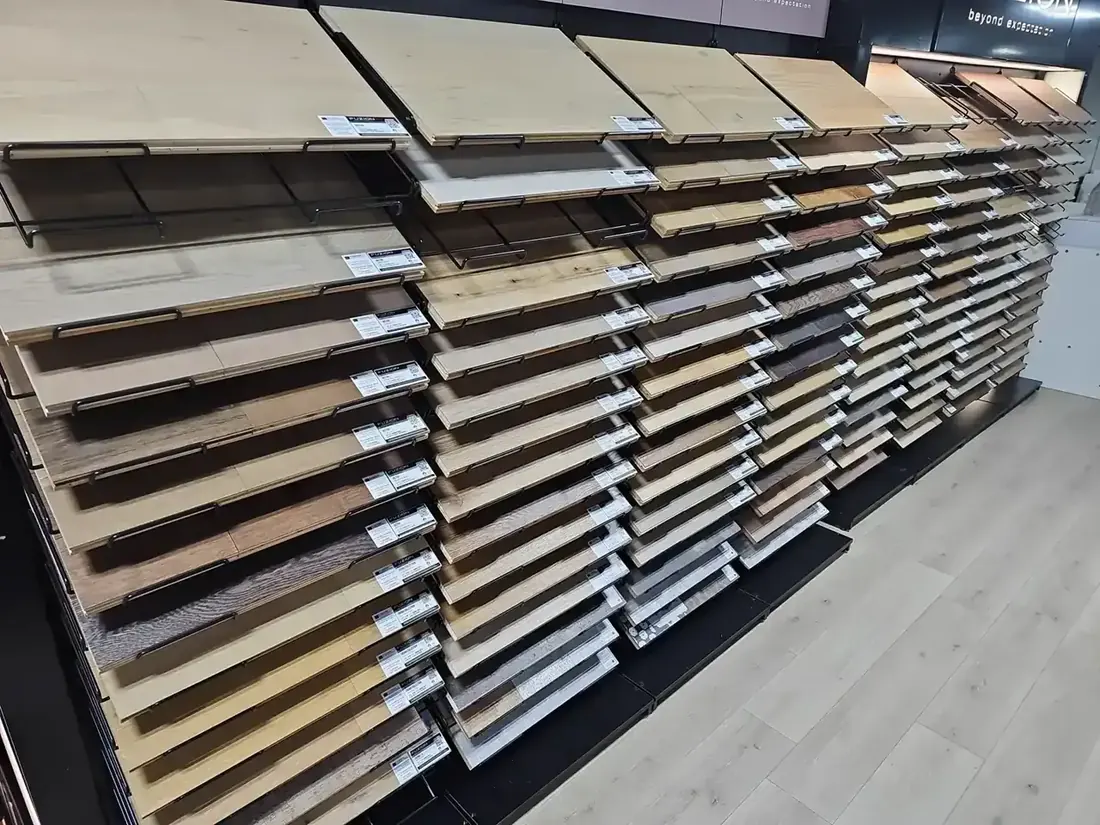
In an open-plan space, your flooring is visible from multiple perspectives simultaneously. Warm and cool tones that work in separate rooms can clash when visible together. Bring large samples of both materials and lay them next to each other in your actual space — under your actual lighting conditions.
Kitchen Considerations
Kitchens have specific demands: spills, dropped items, standing water near the sink and dishwasher. Tile and LVP are the most practical kitchen floor choices. If you run hardwood from the living area into the kitchen, protect it with a mat at the sink and be vigilant about water.
Plank Direction in Large Spaces
Direction matters in large open-plan spaces. Running planks lengthwise through the space draws the eye down the room and makes it feel longer. Running them toward the main view (a window or outdoor space) leads the eye naturally outward. Diagonal installation is a bold look that works in large spaces but creates more waste.
Common Mistakes to Avoid
- Too many transitions in one open space — keep it to two materials maximum
- Transitions placed arbitrarily in the middle of walkways
- Choosing flooring in the store under fluorescent light without testing it at home
- Forgetting to account for the height transition between two different floor types
- Short planks — in large spaces, use longer planks (48"+ for LVP; 5"+ for hardwood) for a more premium look
Bring in your floor plan when you visit our showroom — our team can help you visualize how different products and transitions will look in your specific space.