Both solid and engineered hardwood are real wood products — but they are built differently and behave differently in your home. The wrong choice for your specific situation can lead to gapping, cupping, or expensive repairs. Here's what you need to know before choosing.
What Is Solid Hardwood?
Solid hardwood is exactly what the name says: a single, solid piece of wood milled to a consistent thickness (typically 3/4"). It's the traditional choice — the floors your grandparents had. When they wear down, they can be sanded and refinished multiple times over their lifetime. A solid hardwood floor installed properly can last 100 years.
What Is Engineered Hardwood?
Engineered hardwood has a real hardwood veneer on top — identical to solid hardwood in terms of what you see and feel — bonded to a plywood core beneath. The cross-ply construction of the core makes it dramatically more dimensionally stable than solid wood.
The Core Difference: Stability and Moisture
Wood moves — it expands in humid conditions and contracts when dry. Solid hardwood can show significant seasonal movement, especially in dry climates like the Okanagan. Wide planks move more than narrow ones. This is why solid hardwood cannot be installed below grade (basements) and requires careful acclimation.
Engineered hardwood's plywood core resists this movement. It can be installed below grade, over radiant heat, and in spaces where humidity fluctuates. It still needs some acclimation — but it handles challenging conditions much better than solid.
In Kelowna's dry climate, engineered hardwood is often the smarter choice — the lower humidity levels that cause excessive shrinkage in solid hardwood affect engineered products far less.
Installation Methods
- Solid hardwood: Nail or staple down over wood subfloor only — cannot be glued to concrete or floated
- Engineered hardwood: Can be nailed, stapled, glued down (including to concrete), or floated — far more versatile
Refinishing: How Many Times Can You Sand It?
Solid hardwood can typically be sanded and refinished 4–6 times over its life — the 3/4" thickness gives you plenty of material to work with. Engineered hardwood depends on the veneer thickness: a 2 mm veneer can usually be refinished once; a 4–6 mm veneer can handle 2–3 refinishes.
Cost Comparison
- Solid hardwood: $6–$18/sq ft depending on species and grade
- Engineered hardwood: $5–$16/sq ft — comparable, sometimes less for equivalent appearance
- Installation: Similar costs; engineered glue-down can be slightly higher
Which One Is Right for You?
- Choose solid hardwood for: Above-grade installations, wood subfloors, classic homes, maximum refinishing potential
- Choose engineered hardwood for: Basements, concrete slabs, radiant heat, Okanagan climate, wide planks (7"+ where solid would move too much)
- Either works for: Main floors over wood subfloor in conditioned spaces
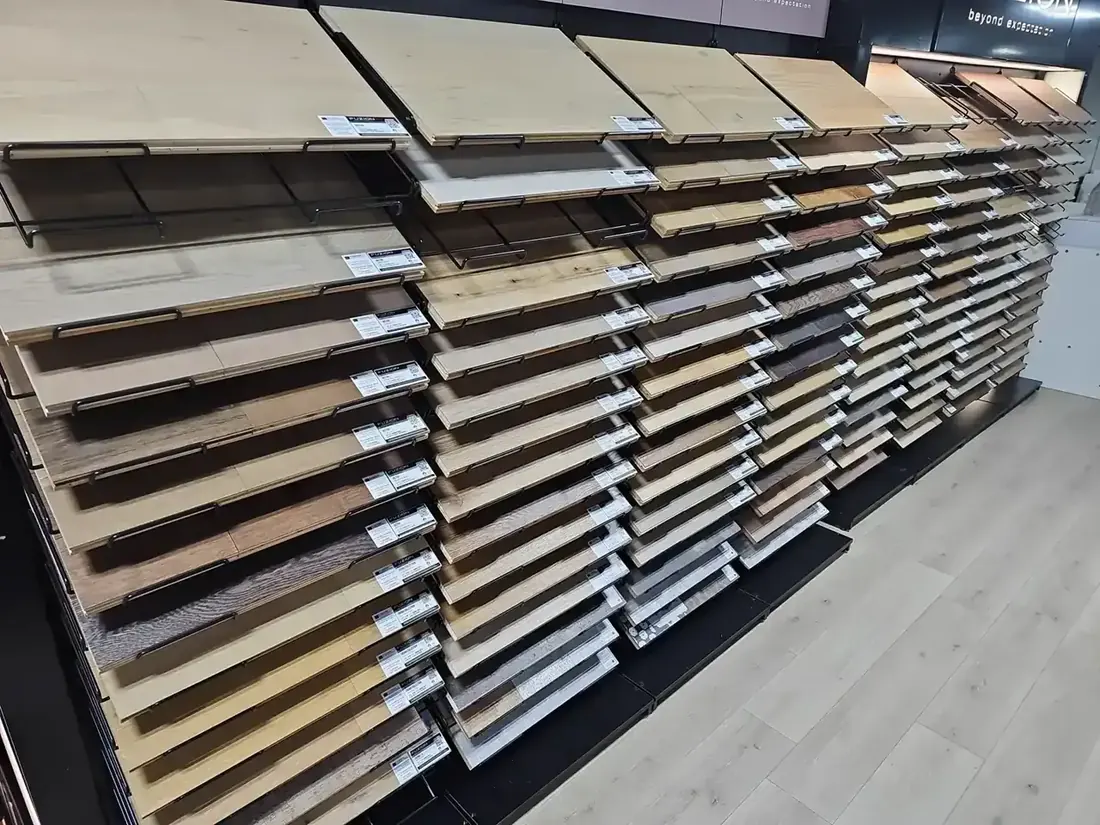
Our showroom carries both solid and engineered hardwood in a wide range of species and widths. Come in and we'll help you decide which is right for your specific rooms and subfloor situation.